


The Ukrainian Feminist Network for Freedom and Democracy participated in the Ukraine Recovery Conference 2026 (URC 2026), which took place in Gdańsk, Poland. The conference served as one of the key international platforms for discussing Ukraine’s recovery, bringing together representatives from governments, international organizations, donors, the business sector, the academic community, and civil society.
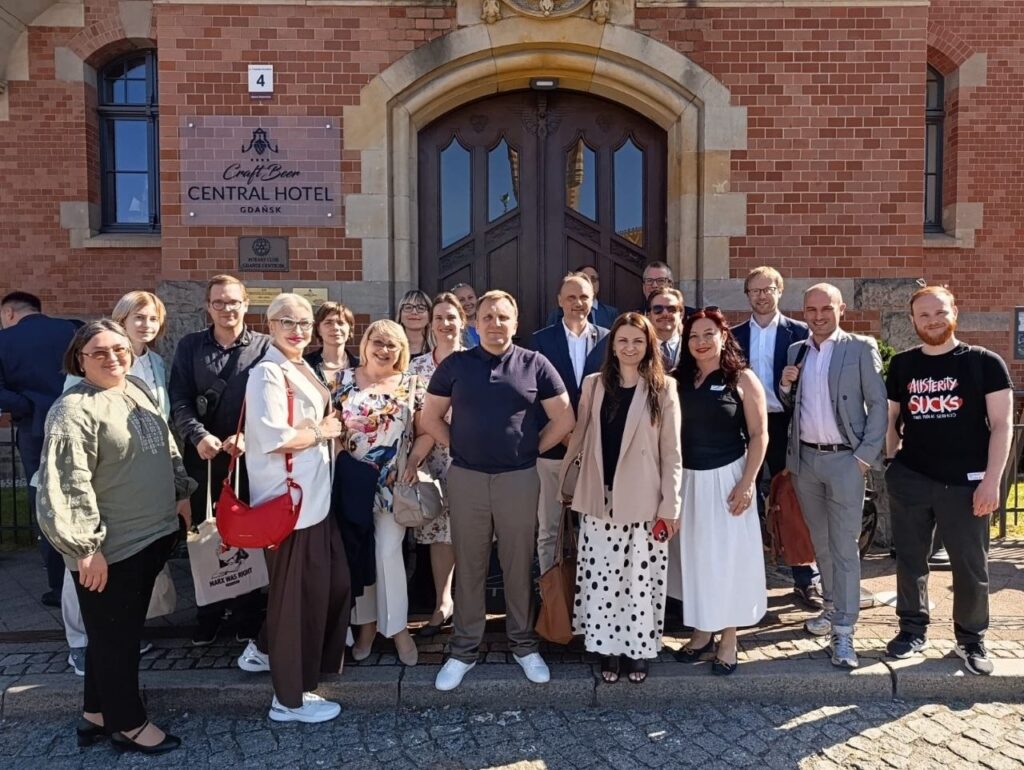
Participating in the conference was an important opportunity for our organization to share our experience in supporting women, developing the feminist movement, and promoting gender equality in Ukraine, as well as to engage in a professional dialogue on the inclusive, equitable, and gender-responsive recovery of the country.
One of the key events was our participation in a side event organized by the Friedrich-Ebert-Stiftung and the London School of Economics (LSE) titled “Towards A Resilient Ukraine: Conditions for a Progressive Recovery,” where leading experts in economics, public administration, politics, and research discussed the long-term conditions for Ukraine’s successful recovery. Particular attention was paid to the human dimension of reconstruction: social cohesion, labor productivity, labor migration, the protection of vulnerable population groups, as well as Ukraine’s role in European and global value chains, the development of the agricultural sector, and innovations in the field of security and defense.
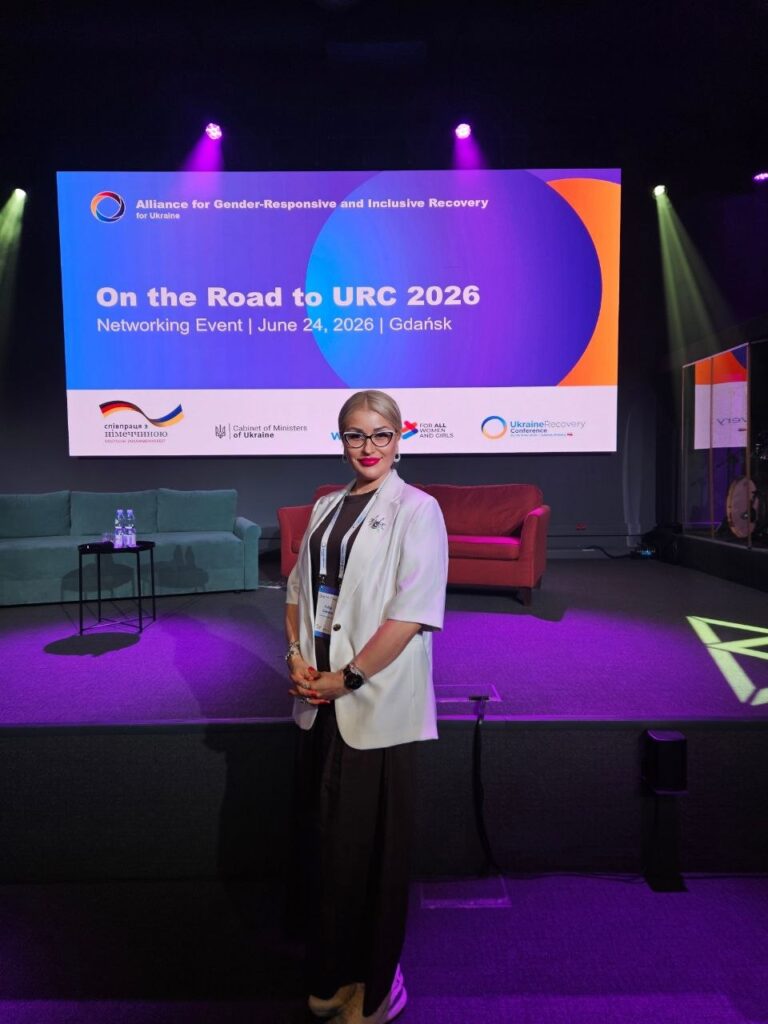
Representatives of the organization also participated in the Networking Meeting of the Alliance for Gender-Responsive and Inclusive Recovery of Ukraine—an international platform that brings together governments, international organizations, civil society, and the business sector to promote a gender-responsive and inclusive recovery in Ukraine. Speakers included representatives from the governments of Ukraine, Poland, and Germany, as well as international partners, notably UN Women. The discussion focused on best practices in the areas of human capital development, local development, entrepreneurship support, security, and European integration.
In addition, we joined the official side event “Ukraine’s European Path: Public Administration Reform and Civil Society as Drivers of EU Accession and the Country’s Reconstruction.” We actively participated in thematic discussions and professional networking, exploring opportunities for cooperation with Ukrainian and international partners to strengthen women’s participation in the country’s recovery, community development, and decision-making processes.
We are convinced that Ukraine’s recovery must be based on the principles of equality, inclusivity, democracy, and respect for human rights. The voices of women, women’s and feminist organizations, as well as other vulnerable groups, must be an integral part of shaping reconstruction policies at the national and local levels. Only such an approach will ensure a sustainable, equitable, and people-centered recovery for the country.
We would like to thank the organizers of the Ukraine Recovery Conference 2026, our partners, and all participants for the open and meaningful dialogue, new professional connections, and the opportunity to work together on Ukraine’s future. Together, we continue to work to ensure that Ukraine’s recovery is not only swift, but also fair, inclusive, democratic, and focused on the needs of every individual.